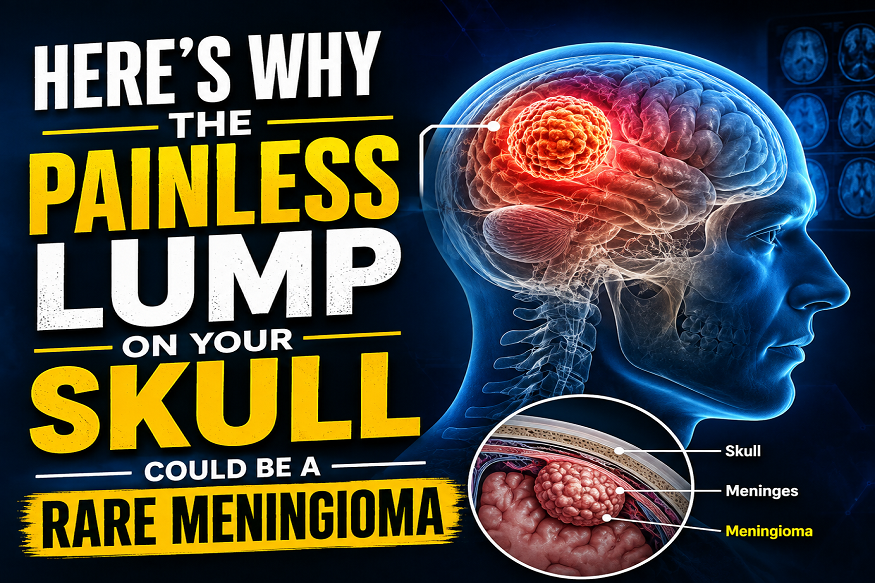
Are you experiencing a painless, yet hard, lump on your skull bone? If yes, it’d be a good idea to get it checked.
Most people ignore such painless lumps on the skull thinking they’re harmless. While many skull conditions are benign in nature, some can point towards a rarer condition like IntradiploicMeningioma.
As a neurosurgeon in Mumbai, my job is often to remind patients that painless swellings should never be ignored, as there could be several underlying diseases that could be causing the lump. It’s always best to get early diagnosis to make treatment simpler and outcomes significantly better.
What is anIntradiploic Meningioma?
Meningiomas typically develop from the protective coverings of the brain. Intradiploic meningioma however, grows within the skull base. It originates and builds in the spongy middle layer of the skull (the diploe) and accounts for less than 2% of all meningiomas cases.
Read More: Jason Membrane GBR Benefits: Native Collagen Structure and Extended Barrier
The best news though, is that nearly 90% of these tumors and benign (WHO Grade 1) and can be often cured with complete surgical removal.
Common Signs and Symptoms ofIntradiploic Meningioma
The most prominent sign of this condition is a slow-growing, painless lump on the skull. Other symptoms that patients may notice include:
- Swelling that feels like it is attached to the bone
- Change in the shape of the forehead or side of the head
- A lump that continues to enlarge over months
Apart from these, I have noticed that most patients almost never experience any kind of neurological symptoms such as headaches or weakness, therefore for us neuro and spine surgery doctors in Mumbai, diagnosis is often delayed. To prevent this, I believe that any skull lump that is increasing in size should be thoroughly evaluated by a specialist, even if it’s painless.
Story Of a Patient witha Painless Lump
Once a man (identity protected) visited my clinic in Mira Road, Mumbai, complaining that one side of his forehead had slowly changed shape over a period of months. There was a firm but painless swelling that was easy to miss. He had no other symptoms like headache, weakness, vision or memory loss. Nothing else was wrong, nothing was amiss, yet the gradual change in the contour of his head was deeply concerning. MRI scans and other reports revealed the culprit – a growing lump that could pose a huge problem for overall brain health.
After thorough diagnosis, surgery and proper care, the man recovered his health back.
When Should You See a Neurosurgeon?
If you sense a lump, then it’s best to not wait for symptoms to improve. Please immediately consult a doctor, especially if you notice any of the other below symptoms:
- The lump is hard and fixed to the skull
- It continues to grow
- The skull is changing shape slowly
- Headaches, vision problems, seizures or weakness if any
- There is a history of cancer elsewhere in the body
A consultation with any experienced neurosurgeon in Mumbai can help determine the problem in advance.
Diagnosis Used forIntradiploic Meningioma
Diagnosis usually happens in three steps:
Step 1: CT Scan
This helps evaluate changes within the skull bone.
Step 2: MRI Scan
Assesses surrounding tissues and checks whether nearby structures are involved.
Step 3: Biopsy (Histopathology)
Confirms the diagnosis by examining the tissue under a microscope.
Treatment Options forIntradiploic Meningioma
Treatment options heavily depend on the size, growth and symptoms of the tumor.
Tiny lesions without much growth can be easily monitored and may just require frequent monitoring.
Surgery however, is generally recommended when the tumor is growing consistently, causing deformity in the head. The operation involves removing the affected portion of the skull along with the tumor. The resulting defect is then constructed again using a cranioplasty with titanium mesh or a customised implant to restore both protection and appearance.
The best treatment for benign tumors is complete removal of it.
Recovery & Prognosis forIntradiploic Meningioma
Post surgery, recovery is generally straightforward. Most patients require only a short time in hospital before returning home. They gradually gain the ability to resume normal activities over the span of a few weeks.
However, neurosurgeons will recommend regular follow-ups and imaging to ensure that there is no more recurrence, although the likelihood of the tumor returning is extremely low.
If you notice a growing lump on your skull, then please seek immediate evaluation from the best neuro spine surgeon in Mumbai. Early diagnosis will ensure that your quality of life is not compromised.
Frequently Asked Questions
I have a hard lump on my head that doesn’t hurt. Should I be worried?
Yes, please get it checked, especially if it’s growing. While most lumps are harmless, we cannot determine the cause behind the lump without proper diagnosis. Painless doesn’t mean harmless, many skull tumors don’t cause pain at all.
Can a lump on the skull be a brain tumour?
Rarely, yes. But usually, such lumps are tumor of the skull and not of the brain. An Intradiploic meningioma grows inside the skull bone and can be easily treated as 90% of them are benign.
Is an intradiploic meningioma cancer?
It is a benign tumor (WHO grade 1), it can be easily removed and has very low chances of recurring.
What tests are done for a lump on the skull?
A neurosurgeon will usually do three tests. A CT scan that shows the bone, an MRI that shows the soft tissue beneath, and if the lump is removed, a pathologist examines the tissue. The last step is what confirms the diagnosis.
Does a skull lump always need surgery?
No, tiny lumps can be easily treated with regular monitoring and medicines. Surgery is usually advised when the lump is growing and changing the shape of the head.
Will my head look normal after surgery? Will there be a dent?
Restoring the shape of the skull is an important part of the surgery. Surgeons repair the skull with cranioplasty which is usually a titanium mesh or custom implant that is shaped to match the natural shape of the skull and head.
Can it come back after it is removed?
The chances are extremely low. However, your neurosurgeon may recommend regular scans and follow ups for safety. Benign tumors have a high surgery success rate and their recurrence is rare.